How Artificial Intelligence Is Changing the Future of Websites
Table of Contents
I remember hand-coding my first website back in 2010. It was messy and static, and it took an entire weekend just to make the homepage look decent. Fast forward to today, and what used to take days can now be done in minutes — thanks largely to artificial intelligence websites that practically build and optimize themselves.
But AI isn’t just about speeding things up. It’s completely rewriting the rules of user experience, personalization, and even how we think about web development. The AI future of websites isn’t some far-off sci-fi concept; it’s happening right now, in ways you might not even notice.
In this article, we’ll explore exactly how artificial intelligence is reshaping the digital landscape — from smarter user interfaces to lightning-fast website creation. Let’s dive in.
Smarter User Experiences with AI
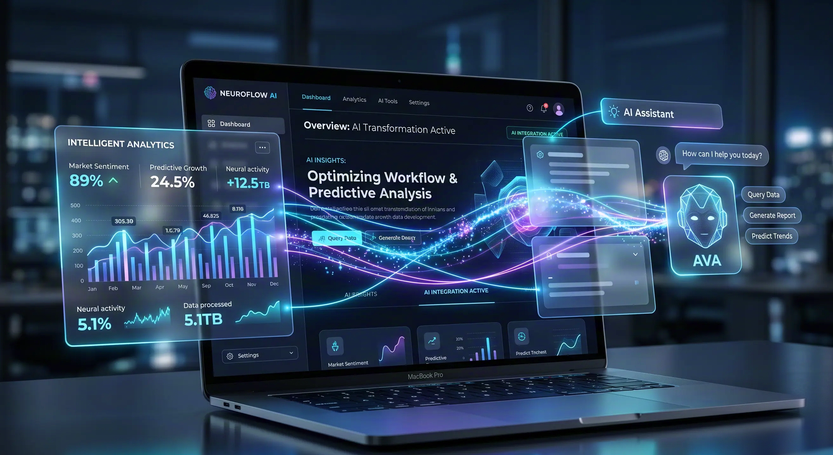
If you’ve ever visited a website that felt like it “knew” what you wanted before you did, you’ve experienced the power of AI-driven UX. Modern smart websites are getting frighteningly good at reading user intent and adapting on the fly.
Predictive Navigation and Search
One of the most subtle but impactful changes is happening in navigation. AI algorithms now analyze how users interact with a site — how long they hover, where they click, what they ignore — and then rearrange menus or highlight specific links to match that behavior. Ever noticed how some e-commerce sites seem to surface the exact category you were looking for without you typing a thing? That’s machine learning at work.
Additionally, AI-powered internal search functions have moved beyond simple keyword matching. They now understand synonyms, typos, and even the context behind a query. For instance, typing “warm outdoor jacket for rain” into a site’s search bar now returns waterproof insulated coats, not just any jacket tagged with the word “warm.” This shift is making artificial intelligence websites feel more like a helpful salesperson than a lifeless catalogue.
Voice and Visual Interactions
Voice search isn’t new, but web-based voice navigation is finally becoming seamless. AI speech recognition can now handle natural language commands, so users can literally talk to a website. Meanwhile, visual search — like taking a photo of a piece of furniture and having a site find similar products — is making shopping experiences far more intuitive. These aren’t gimmicks; they’re solidifying the AI future of websites as something deeply interactive and human-centric.
Accessibility Gets an AI Upgrade
AI is also tackling digital inclusion head-on. Automated alt-text for images, real-time captioning for video content, and dynamic font and contrast adjustment based on a user’s visual needs are becoming standard on forward-thinking sites. Accessibility overlays powered by AI can scan a site’s code and instantly fix many barriers, making the web more usable for people with disabilities. It’s an area where AI web design is not just clever — it’s genuinely ethical.
Take a moment to think about your own browsing habits. How often have you abandoned a site because the navigation was confusing or the search didn’t understand you? With AI, those friction points are fading fast.
Personalized Content & Recommendations
Generic websites are dying. Users now expect an experience that feels custom-built for them — and AI is the engine making that possible at scale. When we talk about artificial intelligence websites, personalization is arguably where the magic really shines.
Real-Time Content Tailoring
Imagine landing on a news website that already knows the topics you care about — not because you told it, but because it analyzed the behavior of thousands of users similar to you. AI can segment users into micro-audiences and display entirely different homepage layouts, article recommendations, or product collections based on real-time data. It’s not just “You bought this, so you might like that.” It’s “You glanced at a video about camping gear, the weather in your area is getting warmer, and people like you often start researching tents in March, so here’s a tent-buying guide.”
This degree of personalization requires heavy data crunching, but modern AI handles it without breaking a sweat. The result is a website that feels personal, which directly boosts engagement and conversion rates. After all, why would you browse a site full of irrelevant content when a smarter alternative exists just a click away?
E-Commerce and the Netflix Effect
Maybe the most famous example of AI personalization is Netflix. Their recommendation engine accounts for around 80% of the content users watch. Now, that same philosophy is trickling down to practically every smart website out there. Fashion retailers use AI to showcase outfits curated to your style history. Grocery delivery platforms predict your weekly shopping list. Even B2B websites are dynamically adjusting case studies and testimonials based on the visitor’s industry.
For smaller businesses, tools like Dynamic Yield or Optimizely (which lean heavily on AI) integrate personalization without needing a team of data scientists. You no longer have to be Amazon to offer an Amazon-level personal experience. That’s the true democratization brought by AI web design.
Geo-Targeting Meets Behavioral Cues
Here’s a concrete example: A restaurant chain’s website can detect a visitor’s nearby location and showcase a menu tailored to regional tastes, while also factoring in the time of day. Visit at 8 a.m., and you’ll see a breakfast menu in a bright, high-energy color scheme. Visit at 9 p.m., and you’ll get mood lighting tones and dinner options. All powered by AI rules that require no manual tweaking.
The takeaway? Personalization is no longer a nice-to-have. It’s the baseline expectation. And artificial intelligence websites that don’t adapt will get left behind.
AI Chatbots & Customer Support
Walk through almost any modern website, and within seconds a chat bubble pops up with a friendly “Hey, how can I help?” It’s not a human behind that initial greeting anymore. It’s an AI chatbot — and it’s getting smarter by the day.
Beyond Scripted Bots
The old days of rule-based chatbots that could only answer five predefined questions are over. Today’s AI-driven support agents use natural language processing (NLP) and large language models to understand intent, tone, and even multiple languages at once. They don’t just match keywords; they genuinely comprehend.
Let’s say a visitor types, “My order was supposed to arrive yesterday, and I’m kind of freaking out because it’s a gift.” A traditional bot might get stuck on “order” and dump a tracking link. An AI chatbot picks up on the frustration and urgency, offers a genuine apology, immediately pulls up the shipment status, and may even proactively offer a small discount. That emotional intelligence, however artificial, makes an enormous difference in customer satisfaction.
Stats back this up. According to research highlighted by Salesforce, 69% of consumers prefer chatbots for quick communication with brands. And Gartner predicts that by 2027, chatbots will become the primary customer service channel for a quarter of organizations. That’s a staggering shift — and a clear signal that AI future of websites revolves around conversational interfaces.
24/7 Support Without Burnout
One obvious advantage is round-the-clock availability. But AI chatbots improve a whole lot more: they provide consistent answers, handle unlimited conversations simultaneously, and can seamlessly hand off complex issues to human agents with full conversation context. This hybrid model is the sweet spot — efficiency plus human empathy at the right moments.
Real-World Bot Success
Take Sephora’s chatbot on their website and app. It not only handles customer service but also offers beauty advice, books in-store appointments, and even lets users virtually try on makeup. It’s a brand engagement machine, deepening user connection far beyond a simple FAQ automaton. Similarly, H&M’s bot acts like a personal stylist, asking about preferences and suggesting complete outfits. Integrating AI web design into these interactive helpers has boosted both sales and loyalty.
Actionable tip: If you’re adding an AI chatbot to your own site, make sure it’s trained on your actual customer data and product catalogue. Generic bots frustrate users. A well-trained bot, on the other hand, feels like an immediate resource — and a quick win for your business.
Faster Website Development

Perhaps nothing illustrates the AI future of websites more dramatically than how sites are built today. Web development used to be a deeply technical domain. Now, anyone with an idea can launch a polished, functional site in an afternoon. That speed isn’t about developers losing their jobs — it’s about the entire creative process becoming more accessible and efficient.
AI-Powered Website Builders
Platforms like Wix ADI (Artificial Design Intelligence) and Bookmark’s AiDA ask you a few simple questions — business type, preferred style, key features — and then generate a complete, customizable website. We’re not talking about cookie-cutter templates. These artificial intelligence websites builders analyze millions of site designs and user behavior patterns to create layouts optimized for both aesthetics and conversions.
10Web takes it even further by using AI to recreate any existing website design and convert it into a fully editable WordPress site in minutes. For small business owners and solo entrepreneurs, this is revolutionary. You no longer need to know CSS or worry about mobile responsiveness; the AI handles it.
Code Assistance and Automation
For professional developers, AI is turbocharging workflows. GitHub Copilot, an AI pair programmer, suggests whole blocks of code based on natural language comments. Need a responsive navigation bar? Type a description, and Copilot writes the HTML, CSS, and JavaScript for you. This doesn’t eliminate the need for expertise, but it dramatically cuts down on repetitive tasks and debugging time.
Testing and quality assurance get smarter too. AI can crawl a site, identify visual bugs, and even predict where users might encounter friction. Accessibility audits, cross-browser compatibility checks, and performance optimization happen almost automatically. Imagine pushing a design live with an AI safety net that catches breakpoints you would’ve missed — that’s the new reality.
Image and Content Generation
High-quality visuals are essential, but not everyone has a photography budget. AI generation tools like DALL·E and Midjourney create unique, royalty-free images from scratch. Similarly, AI copywriting assistants can draft on-brand product descriptions, blog posts, and meta tags. An AI web design approach marries these tools with the layout engine, populating a site with both visuals and text that feel cohesive and human — often with minimal manual input.
Mistakes to avoid: Relying entirely on AI-generated content without human editing can make your site feel soul-less. Use AI to jumpstart creation, but always inject your own voice. And always double-check AI-written code for potential security gaps — it’s a tool, not a replacement for good judgment.
Challenges and Limitations
For all the hype, it’s important to keep things realistic. The rise of artificial intelligence websites doesn’t mean perfection has arrived. There are some genuine hurdles that businesses, developers, and users need to be aware of.
Data Privacy and Trust
Personalization feeds on data. The more a website knows about you, the better it can tailor the experience. But in an era of GDPR, CCPA, and growing privacy awareness, users are increasingly wary of how their information gets collected and used. AI-driven sites walk a tightrope: deliver a magical customized experience without creeping people out or violating regulations. Over-personalization can backfire spectacularly — when a site references something a user only briefly glanced at, it can feel invasive rather than helpful.
Transparency is non-negotiable. Clear cookie consent, easy data-control settings, and ethical AI frameworks must be part of the AI web design process from day one. Otherwise, trust erodes, and a smart website becomes a suspicious one.
Algorithmic Bias and Fairness
AI models learn from existing data. If that data reflects societal biases, the website’s behavior will too. For example, an AI recruiting site might unconsciously favor male candidates if trained on historical hiring patterns. Or an e-commerce recommendation engine could show luxury products to users from certain zip codes while steering others toward cheaper alternatives. These are not hypotheticals — they’ve happened. Building smart websites that serve all users equitably requires constant auditing and a commitment to inclusive training data.
Over-Automation and the Human Touch
There’s a distinct risk in automating too much. Websites can become so optimized for algorithms that they lose their soul. Content might rank well in search but read like robotic drivel. Designs might convert effectively but feel generic and forgettable. The best websites still carry a unique brand identity — a human spark that AI can’t fully replicate. Balancing efficiency with authenticity is a challenge that no amount of machine learning can yet solve. Designers and writers who understand emotion and storytelling remain invaluable.
Developer Deskilling Concerns
The torrent of AI coding tools has sparked a valid worry: Will new developers skip learning fundamental concepts? If a junior dev constantly leans on Copilot, do they really understand what the code does? There’s a real danger of creating a generation of paste-and-run builders without deep problem-solving skills. The industry will need to adapt, focusing education on critical thinking and architecture rather than just syntax. The AI future of websites must include responsible upskilling — not just flashy shortcuts.
Acknowledging these limitations isn’t pessimistic. It’s exactly what we need to steer AI toward responsible, human-first implementation.
Final Thoughts
It’s impossible to ignore the transformation underway. Artificial intelligence websites are no longer experimental novelties — they’re the new baseline for what users expect. Whether you’re a business owner launching your first site or a seasoned developer refining your craft, AI has something to offer.
We’ve looked at smarter user experiences that anticipate needs, hyper-personalization that makes every visit feel bespoke, chatbots that bring genuine empathy to digital support, and development tools that slash build times from weeks to hours. But we’ve also acknowledged the real-world constraints: privacy pitfalls, bias, and the irreplaceable value of human creativity.
The path forward isn’t about blindly handing the reins to machines. It’s about using AI web design as a force multiplier. Let AI handle the drudgery — the data analysis, the A/B testing, the code scaffolding — so you can focus on what truly matters: crafting an experience that resonates on a human level. Because in the end, websites exist for people, not algorithms.
If there’s one takeaway, it’s this: Start small, but start now. Experiment with an AI heatmap tool on your current site. Test a personalized recommendation widget. Add a well-trained chatbot to your customer service stack. The smart websites of tomorrow aren’t built with a single massive overhaul; they evolve through iterative, AI-informed improvements.
The internet is shifting beneath our feet. The only question is whether you’ll adapt with it or watch from the sidelines. Embrace the tools, keep the human element central, and you’ll be part of a future that’s both wildly innovative and deeply connected. If this article sparked any ideas, try one new AI-driven feature on your website this week — and see the difference it makes.
FAQs
1. How is AI being used in web design?
AI is used in web design through automated website builders, intelligent layout suggestions, predictive UX adjustments, and code generation. These tools analyze user behavior and design trends to create responsive, personalized websites without manual coding. It’s a core part of AI web design, helping both beginners and professionals work faster.
2. Will AI replace web developers entirely?
No. While AI can automate many routine tasks like code scaffolding and image optimization, web developers are still essential for complex logic, creative direction, and strategic decisions. The role is shifting toward higher-level problem-solving rather than disappearing. Developers who learn to leverage AI tools will actually become more valuable.
3. What are smart websites?
Smart websites use AI to dynamically adapt content, layout, and functionality based on user behavior, preferences, and context. Rather than showing the same static page to every visitor, they react in real time to deliver a tailored experience — think personalized product recommendations or a navigation menu that reorganizes itself for each user.
4. How does AI improve website personalization?
AI improves personalization by analyzing massive amounts of user data — clicks, time on page, purchase history, location, and even weather patterns — to display the most relevant content, product suggestions, or offers. Machine learning algorithms continuously refine these predictions, making each visit feel uniquely crafted for the individual.
Enjoyed this article? Stay ahead of the curve — subscribe to our newsletter for more insights on the evolving web landscape. And if you’ve tried any AI tools on your own site, drop a comment below; we’d love to hear what worked!